What Is a Low Deflection Pool Cue Shaft?

If you have spent any time around pool, you have heard the phrase "low deflection shaft." But a lot of players use the term without fully understanding what it means — and almost no one explains it clearly. This article is the plain-English version.
What Is Deflection (Squirt)?
When you strike the cue ball dead center, it travels straight along your aiming line. But when you hit the cue ball off-center — to apply english, draw, or follow — the cue ball does not travel perfectly straight. It pushes slightly off line, in the opposite direction of the spin.
That off-line push is called deflection, or squirt. It is a physics reaction: when the tip strikes the cue ball off-center, the cue ball pushes back on the shaft, and the shaft flexes. That flex sends the cue ball off its intended line.
The further off-center you hit, the more the cue ball squirts. Heavy side english produces a lot of squirt; a center hit produces almost none.
Why Deflection Matters
Every time you use english, you have to compensate for squirt. If you know your shaft pushes the cue ball a quarter inch left when you hit right english, you aim a quarter inch right to correct for it.
That compensation is a learned skill, and good players do it instinctively. But it is a variable. The less your shaft deflects, the less you have to compensate, and the more directly your aim translates to where the cue ball goes.
That is the entire appeal of a low deflection shaft: it removes a variable.
How Shaft Construction Changes Deflection
The amount a shaft deflects depends heavily on the mass at the front end of the shaft — the part closest to the tip. A heavier front end pushes the cue ball off line more. A lighter front end pushes it less.
This is why low deflection shafts are engineered to reduce front-end mass. There are two main ways to do it:
- Wood shafts can be drilled out, thinned, or fitted with special ferrules and inserts to lighten the front end.
- Carbon fiber shafts can be engineered with hollow or layered composite construction that achieves very low front-end mass with high stiffness and consistency.
Carbon fiber is particularly good at this because the material lets designers control exactly where mass sits. For more on that, see our best carbon fiber pool cue shaft guide.
Tip Diameter and Front-End Mass
Tip diameter plays into this too. A smaller tip (like an 11.8mm pool cue shaft) usually means less material at the front, which can mean lower deflection. A larger tip (like 12.2mm) has slightly more front-end mass but offers more stability and a bigger sweet spot.
The diameter is a trade-off between deflection, spin potential, and the stability of the hit. Neither is universally better — it depends on your game.
Carbon Fiber and Low Deflection
Carbon fiber has become the dominant material for low deflection shafts because it solves the core engineering problem: get the front end as light and as stiff as possible, consistently, without warping.
A carbon fiber low deflection shaft can be built to a tolerance wood cannot match, and it will play the same way years from now. That repeatability is what makes low deflection actually useful — if your shaft deflected differently every session, you could never learn to trust it.
Does Low Deflection Automatically Make You Better?
This is the honest part. A low deflection shaft does not magically improve your stroke. It does not give you better position by itself. What it does is reduce the amount you have to compensate when you use spin — so your aim is more directly tied to where the cue ball goes.
For a player who uses a lot of english, that is a real advantage. For a player who hits mostly center ball and rarely spins, the difference is smaller.
The shaft removes a variable. It does not replace the work of building a solid stroke, learning speed control, and reading angles. A low deflection shaft rewards a good player; it does not create one.
Who Benefits Most From a Low Deflection Shaft
- Players who rely on english and side spin for position.
- Players who want predictable, repeatable cue ball reaction.
- Players who compete and need consistency across long sessions and different tables.
- Players upgrading from a worn or generic shaft.
If you mostly shoot center-ball and rarely use spin, you will notice less of a difference — but the consistency and durability still help.
How Precision Designs Low Deflection Shafts
Our approach to low deflection is straightforward: engineer the front end to be as light and stiff as possible without making the hit feel hollow. A shaft can have great deflection numbers and still feel dead or clicky, which nobody wants to play with.
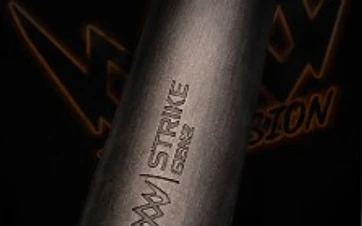
The Gen2 Carbon Fiber Shaft is our expression of that philosophy — low deflection, a solid connected hit, and a 12.2mm profile that balances spin potential with stability.
Gen2 Carbon Fiber Shaft - 29 inch 12.2mm
A 12.2mm carbon fiber shaft engineered for ultra-low deflection and a solid, connected hit.
We focus on the combination that actually helps you play — low deflection plus a hit you can trust — rather than chasing a single number for marketing.
Frequently Asked Questions
What is cue ball deflection? It is the amount the cue ball pushes off your aiming line when you strike it off-center to apply spin. Less deflection means the cue ball stays closer to where you aimed.
Does a low deflection shaft make me a better player? It removes a variable, which helps players who use spin. It does not replace a good stroke or solid fundamentals.
Is carbon fiber the only way to get low deflection? No — maple shafts can be engineered for lower deflection too. But carbon fiber achieves lower, more consistent front-end mass than wood typically can.
What tip diameter is best for low deflection? Smaller diameters (around 11.8mm) can reduce deflection further, but larger diameters (12.2mm) offer more stability. It is a trade-off, not a rule.
For the broader picture, our carbon fiber vs wood comparison and our complete buying guide cover the rest of what you need to choose a shaft with confidence.